
Fairland City Directory Shelves
Fairland keeps no city clerk and no municipal directory shelves of its own. Its directory trail is county-led and suburban by nature. The Silver Spring Historical Society finding aid anchors the local search because it names directory runs whose addresses later fell under Fairland, Burtonsville, or Silver Spring. Other institutions widen the path. Montgomery History, the Maryland State Archives, Montgomery County Public Libraries, and the Library of Congress each add records, maps, or access routes. Search every Fairland volume with the postal or community label used in that particular year.
| Collection | Years | Where held | Access |
|---|---|---|---|
| Nelson's Washington Suburban Directory | 1912; 1916–1918; 1923 | Silver Spring Historical Society collection | By appointment |
| Polk's Washington Suburban Directory | 1927–1928; 1930–1931 | Silver Spring Historical Society collection | By appointment |
| Polk's Silver Spring City Directory | 1954, 1960, 1962, 1964, 1966, 1968, 1969, 1971, 1973 | Silver Spring Historical Society collection | By appointment |
| Silver Spring Community Phone Book | 1995–present | Silver Spring Historical Society collection | By appointment |
| Maryland telephone-directory reels | Twentieth-century material, with dates varying by reel | Library of Congress | Reading-room or collection access |
Gaps run through these Fairland city directory collections. A missing year or absent name proves nothing about who was present. Keep any historical locality label exactly as printed. Beyond directories, the Society's finding aid lists newspapers, maps, photographs, yearbooks, and ephemera that can supply a second dated clue.
Fairland Has No Municipal Directory
Official sources list Fairland as Census CDP 2427250, not an incorporated municipality. No Fairland city hall exists. There is no city clerk, municipal court, city tax office, or independent city archive. That jurisdictional fact is why a Fairland city directory search must pass through Montgomery County. It also runs through regional institutions rather than a nonexistent municipal office.
The East County Regional Services Center groups Fairland and Briggs Chaney with other eastern communities. Libraries and archives hold the historical shelf. Operational labels vary around Fairland. Praisner Library and Fairland Recreation Center carry a Burtonsville postal label. The East County center uses a Silver Spring one. Such labels help you retrieve a volume. They are not proof of any municipal boundary.
Follow Fairland City Directory Years at SSHS
The Silver Spring Historical Society finding aid covers a large collection. It reaches from 1900 to the present. The aid gathers the Nelson, Polk, Silver Spring, and community phone-book sequences in one place. Research visits run by appointment, and listed copies cost $0.25 per page. For Fairland work, keep your citation complete. Record the title, publisher, year, page, and locality label together.
The same document links to Montgomery History's property research guide. It is a strong companion whenever a directory address needs connecting to a land description, historic map, or deed reference.
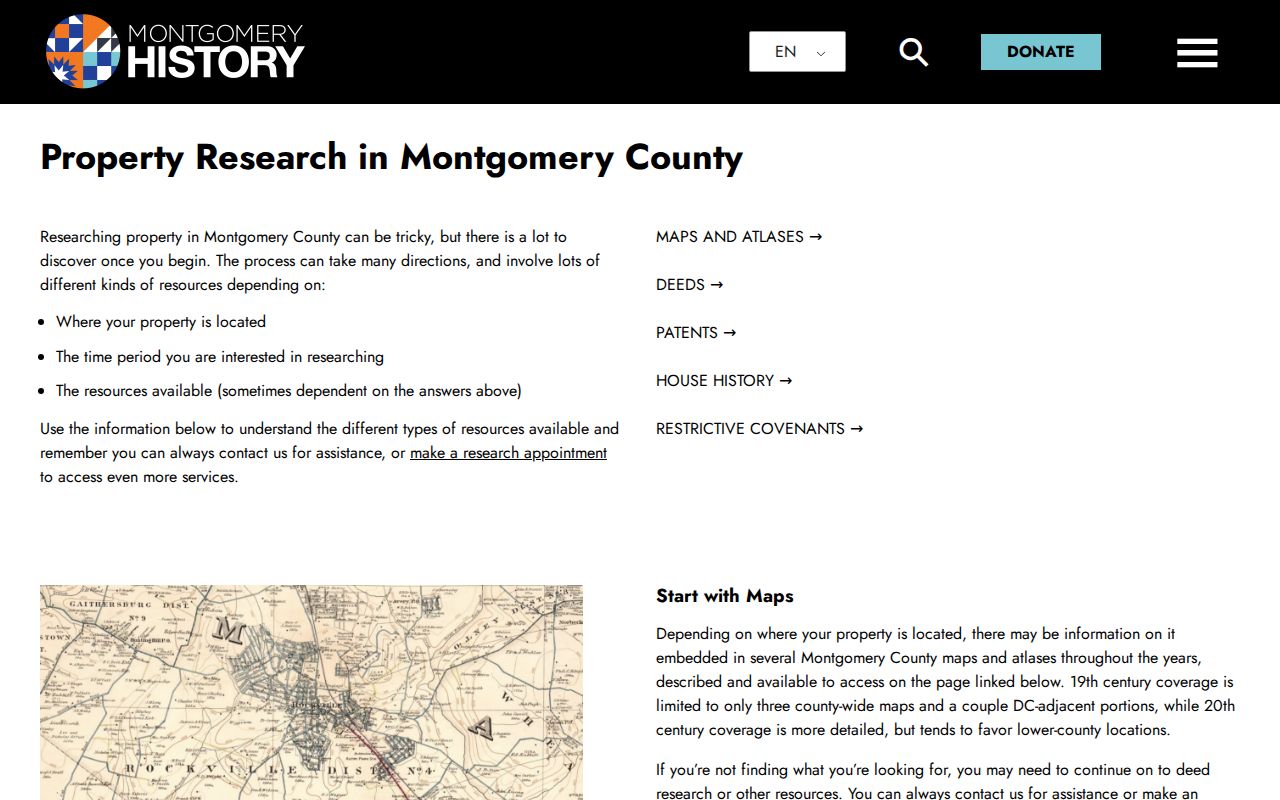
The property guide treats a Fairland directory address as one lead among several. Start from a current SDAT parcel and deed reference when the address is known. Then work backward through the instrument chain. A directory listing can narrow a year or a spelling. It cannot replace the deed image or parcel record.
Note: Cite the contemporaneous place label, since Fairland, Silver Spring, Burtonsville, Briggs Chaney, district, and farm names can each fit different years.
Use Fairland City Directories With Archives
The Maryland State Archives Montgomery County guide is the Fairland bridge from a directory clue to official county series. It points researchers toward land, marriage, probate, court, and other historical records by series identifier. Record the series name and date span. Then request the matching index, image, microfilm reel, or reference service. Fairland historical records may sit under counties, districts, churches, courts, or private estates. They may not carry the later Fairland name. The Archives guide page documents that entry point for any Fairland city directory lead.
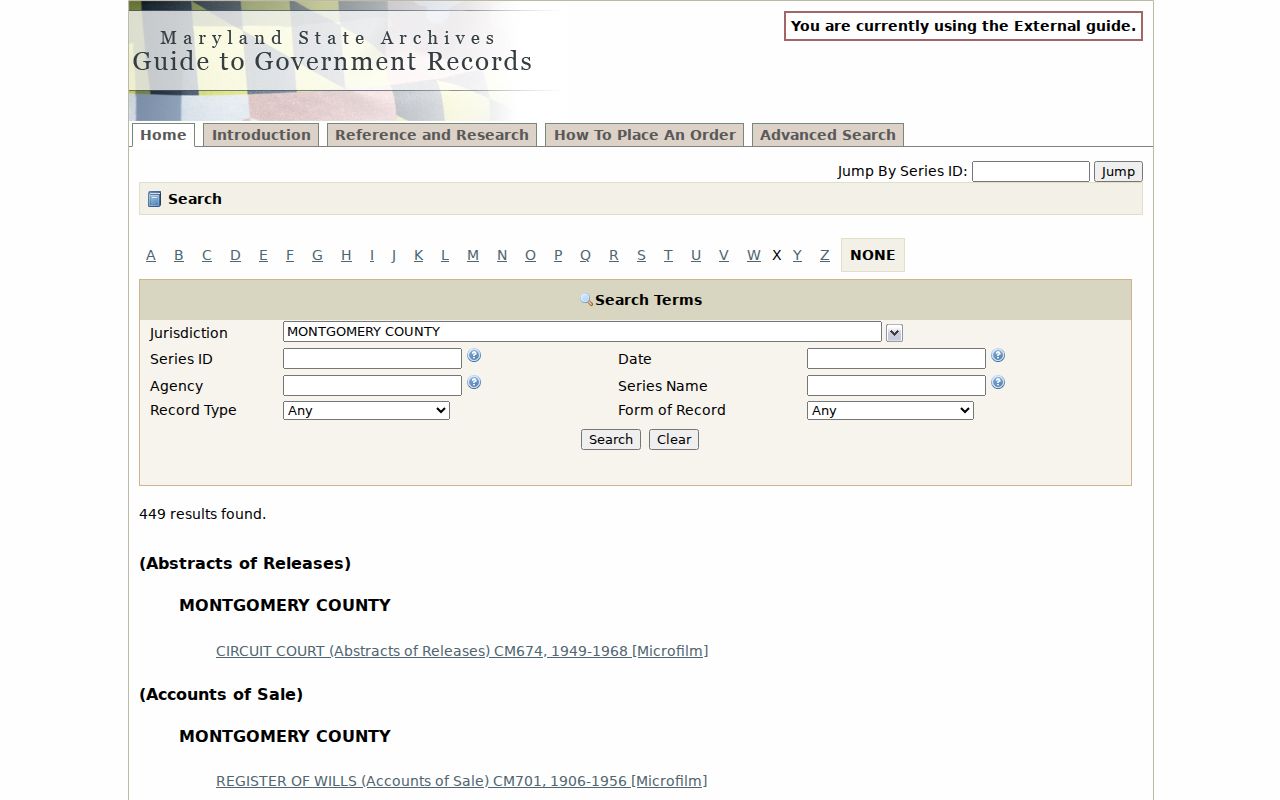
Montgomery History holds County Sentinel coverage from 1855 to 2020. It also holds Gazette coverage from 1960 to 2015. Its tombstone cards span 111 cemeteries and family burying grounds. Church records, wills abstracts from 1776 to 1875, and marriages from 1798 to 1898 fill the shelves. Land abstracts from 1777 to 1865, tax assessments from 1793 to 1865, and census material from 1776 to 1900 add more. Montgomery Mutual Fire policies from 1848 to 1925 round out the collection. These Fairland finding aids can point you toward the custodian of an original record.
Read a Fairland City Directory Entry
A Fairland directory entry should be recorded exactly as printed once a volume opens at the Society, Montgomery History, MCPL, or the Library of Congress. The useful inventory is modest but specific. Name, street number and name, unit if shown, postal or community label, spouse or household notation, cross-reference, abbreviation key, and any historical status mark all belong in your notes. Do not assign a mark a meaning until the volume's own key supports it.
| Name as printed | Preserves the volume's spelling, initials, suffixes, and punctuation. |
|---|---|
| Street address | Connects the listing to a dated location, subject to later number or street changes. |
| Locality label | Shows whether the publisher used Fairland, Silver Spring, Burtonsville, or another supported label. |
| Household notation | Retains any spouse or household wording that appears in the entry. |
| Cross-reference or mark | Must be interpreted from the volume's abbreviation key, not by guesswork. |
- Criss-cross directory
- A street-ordered listing that turns an address into a historical name clue for a stated year.
- Householder index
- An index organized around a household listing rather than a parcel or legal ownership record.
- Abbreviation key
- The publisher's explanation of shorthand and symbols, which should be copied with the entry.
Every Fairland city directory entry is a snapshot frozen at one moment, so treat it as a lead rather than the final word. Confirm each name, address, and date against a deed, census page, newspaper item, probate record, or map whose details line up.
Place Fairland City Directories in Time
Fairland's record trail changes names and custodians over time. Directory years serve best beside records from the same period. A deed, map, or census page dated near the volume can confirm the address or family connection the listing suggests.
- 1776–1777: Montgomery County formed and its land-record sequence began in July 1777.
- 1912–1923: Nelson's Washington Suburban Directory years appear in the Silver Spring Historical Society holdings.
- 1927–1931: Polk's Washington Suburban Directory supplies selected suburban listings.
- 1931–1959: Klinge atlases can supply covered-area owner names and liber or folio references.
- 1954–1973: Selected Polk's Silver Spring City Directory volumes offer recurring address snapshots.
- 1995–present: The Silver Spring Community Phone Book continues the local sequence.
The federal census layer for Fairland sits in the National Archives census collection, which reaches through 1950 under the 72-year release rule. Fairland carried a CDP boundary on newer counts. That line never matches an older census district. Keep the historical place label and its enumeration context intact whenever you tie a Fairland residents directory entry back to a census year.
Consult Fairland Directory Resources Locally
Marilyn J. Praisner Library, once named Fairland Library, is the closest County branch for this work. Check the Fairland branch directory for current hours first. Closures happen. Staff at the desk can open doors to the catalog. They can also open doors to obituaries, newspapers, genealogy databases, and local-history files. In the catalog, rotate terms like Montgomery County, Silver Spring, Burtonsville, Fairland, Briggs Chaney, Columbia Pike, directories, yearbooks, and cemetery records. Keep rotating until the city directory holdings surface. The branch's official page gives the location details a Fairland directory search needs.
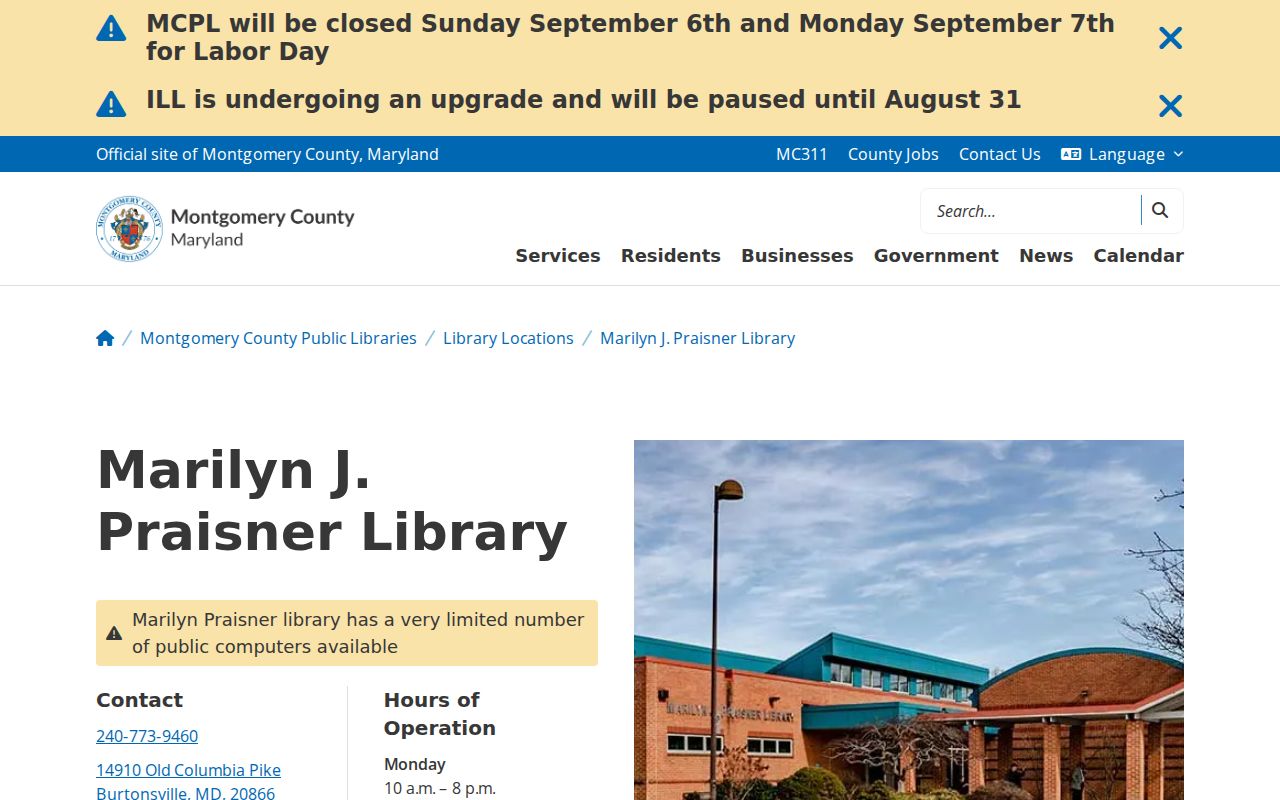
The wider Montgomery County Public Libraries system runs 21 branches plus research databases and digital collections. Write down every catalog record in full. A call number, date, and collection name for a Fairland volume make any later archive or reading-room request far easier to verify as a residents directory source.
Connect Fairland Directories to Maps
Old Fairland street names sink many searches. A historical directory can look empty for a simple reason. The modern street or locality term did not exist yet. Montgomery History's map index lists Fairland District and Greencastle Road material from 1959. Fairland Acres items date from 1961. Fairland and Beltsville items date from 1966 and 1968. Fairland, Cloverly, and White Oak planning maps run from 1980 through 1981. Before trusting a map, request the sheet number, scale, creator, repository location, and any index.
For directory requests beyond the County, the Library of Congress city and telephone directory guide handles street, city, telephone, and criss-cross lookups. Name the directory type, the location and state, and the years you need. Reading-room staff work from a paper slip. Up to 40 items can be requested per day. Bulk requests should go in at least 24 hours ahead. Same-day retrieval can take up to two hours. The same Library of Congress guide spells out each of these rules. The rules matter for any Fairland city directory visit.
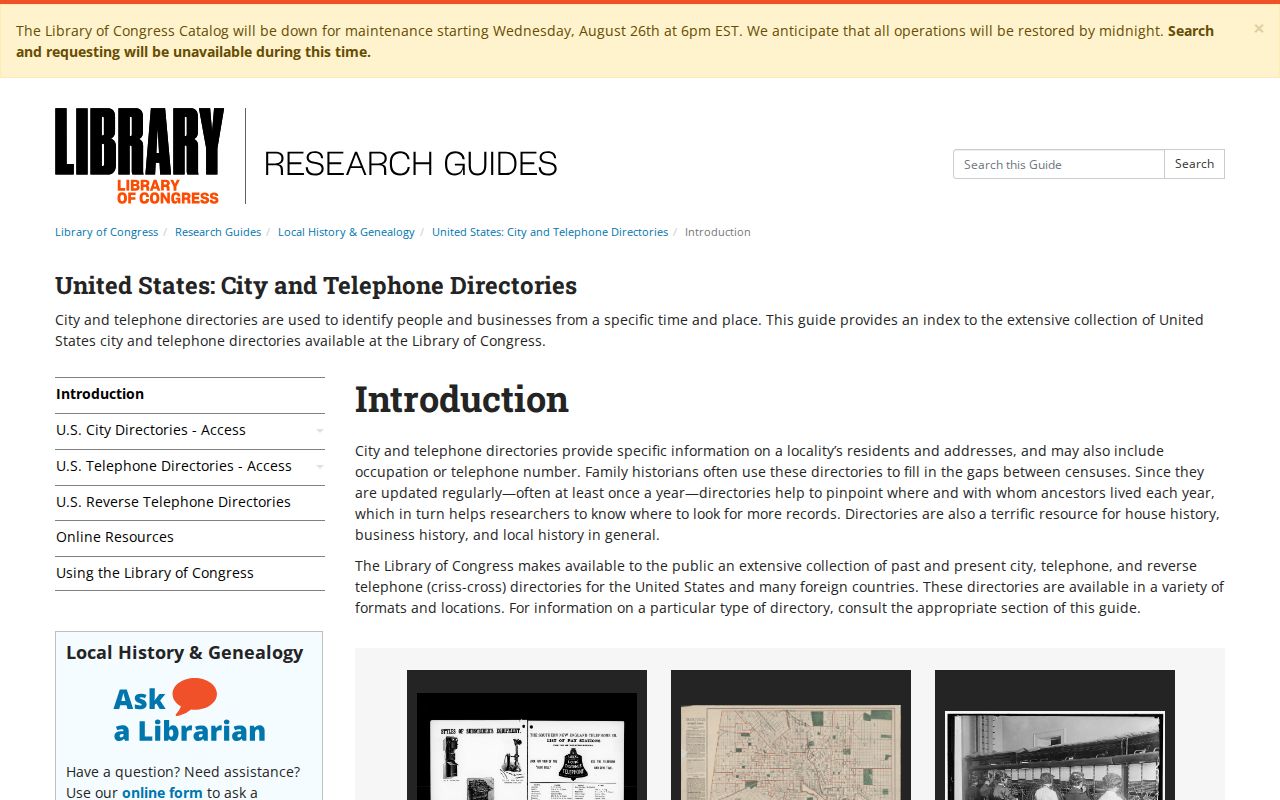
The Library's Maryland telephone-directory collection holds 8,327 reels, with roughly 3,500 digitized. Coverage of that size still promises nothing. Not every Fairland year or address is present. Treat an absent listing as a source limitation until a second directory collection confirms it one way or the other.
Trace Fairland Families Through City Directories
Fairland city directories work best as a spine. Trace the household across dates, then let independent records test each link. Start with the earliest known year. Repeat the name and address search in every later volume. Note each move and every altered locality label. Pair the sequence with census years, deeds, newspapers, probate, cemetery cards, or church records only where address, name, and time period all fit. A Fairland disappearance has many explanations. It could be a move, an unlisted household, or a changed name. It could also be a new publication rule, or a plain gap in the run of the residents directory itself.
- Find the first supported directory year for the name or address and capture the publisher, page, locality label, and abbreviation key.
- Search later available volumes in sequence, preserving spelling changes and addresses rather than merging them prematurely.
- Use the criss-cross section, when available, to test an address against the same volume's street ordering.
- Pair the dated listing with the closest available census year, keeping the enumeration-district difference in mind.
- Confirm a property connection through a deed, map, or parcel description and record the source date for each step.
Once the historical work is done, a modern address-keyed check can follow through the Fairland street directory route across USPS, County GIS, SDAT, and land records. Keep that finding separate from the historical conclusion.