
Finding Fairland Residents Through Records
Fairland is an unincorporated place in Montgomery County, a Census-designated spot with no single clerk or master roll. That shapes every search. A street address opens the county trail. It leads to county geography, a parcel card, and a deed reference. A full name with birth date, ZIP, and street number can support a narrow election lookup. Older households need older sources. A dated directory, newspaper item, census page, or archive record may hold a past Fairland address, and each result should keep its source date and match the question asked.
Start with the physical address whenever you can. The USPS ZIP Lookup confirms the mailing form, while county tools add the local address and its service context. Many Fairland addresses carry Silver Spring or Burtonsville labels. Neither label is a municipal boundary. The address, direction, suffix, unit, and date must travel with the search into every record.
- Normalize the full street address and save the returned postal city and ZIP.
- Use county address information, then search the parcel card by address, street, map reference, or property account number.
- Follow the parcel card's deed reference into the land-record index and image.
- For a narrow name-and-address match, use the state voter form with the required identifying fields.
- For an older household, compare a directory year, newspaper, census record, or archive series with the dated address.
Each record answers a different question. A parcel card names the last recorded deed owner. A voter record tests the details you submit, and a directory freezes an earlier address in time. Note: A name in one record can be an owner, party, applicant, or historical listing rather than a current Fairland resident.
Fairland Resident Records Offices
The records behind a Fairland resident trail sit in county and state offices. The Land Records Department keeps the instruments and indexes. SDAT ties an address to a parcel card. Election offices keep the regulated voter rolls. The county regional-services center adds local context for Fairland and Briggs Chaney, though it is no city clerk and no people directory. For a full address-led sequence, follow the Fairland street directory record path.
Montgomery Land Records
North Tower, Room 2120
50 Maryland Avenue, Rockville, MD
240-777-9477
Maryland SDAT
Statewide real-property custodian
Address, street, PAN, map, and sales paths
Free public search, no account
Montgomery Elections
18753 N Frederick Avenue, Suite 210
Gaithersburg, MD 20879
240-777-8500
The Montgomery County Land Records screen shows that land instruments stay public through the court department and its online route. That is the official door.
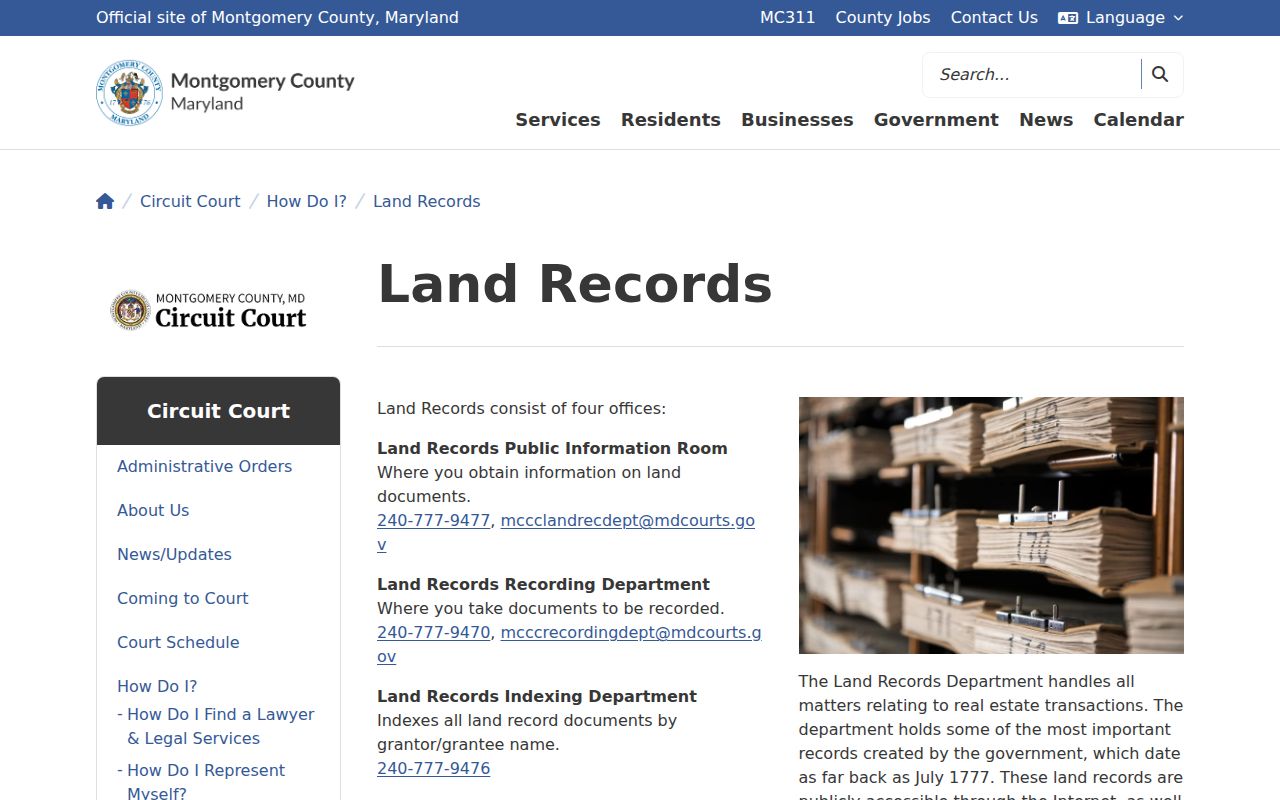
Go there for a recorded instrument, a copy request, or a visit to the information room. Then use the parcel's book and page.
Fairland Address Records Need Labels
Fairland's record geography stacks several layers on one place. The Census calls it a CDP. County regional-services materials group Fairland with Briggs Chaney and the nearby eastern communities. The postal city may be Silver Spring or Burtonsville. The planning-area name, ZIP, precinct, parcel, and CDP can all describe the same vicinity. They rarely share one boundary.
AccessMyAddress takes a full or partial Montgomery County address. Pick a suggested match and inspect the county, district, planning, service, and linked details it returns. Its text-only format helps when the map viewer is hard to use. Keep the county's spelling and date. A historical directory can use a different locality label or an older street form.
The Montgomery County GIS applications index links address, parcel, property, service-area, and planning viewers for the same address.
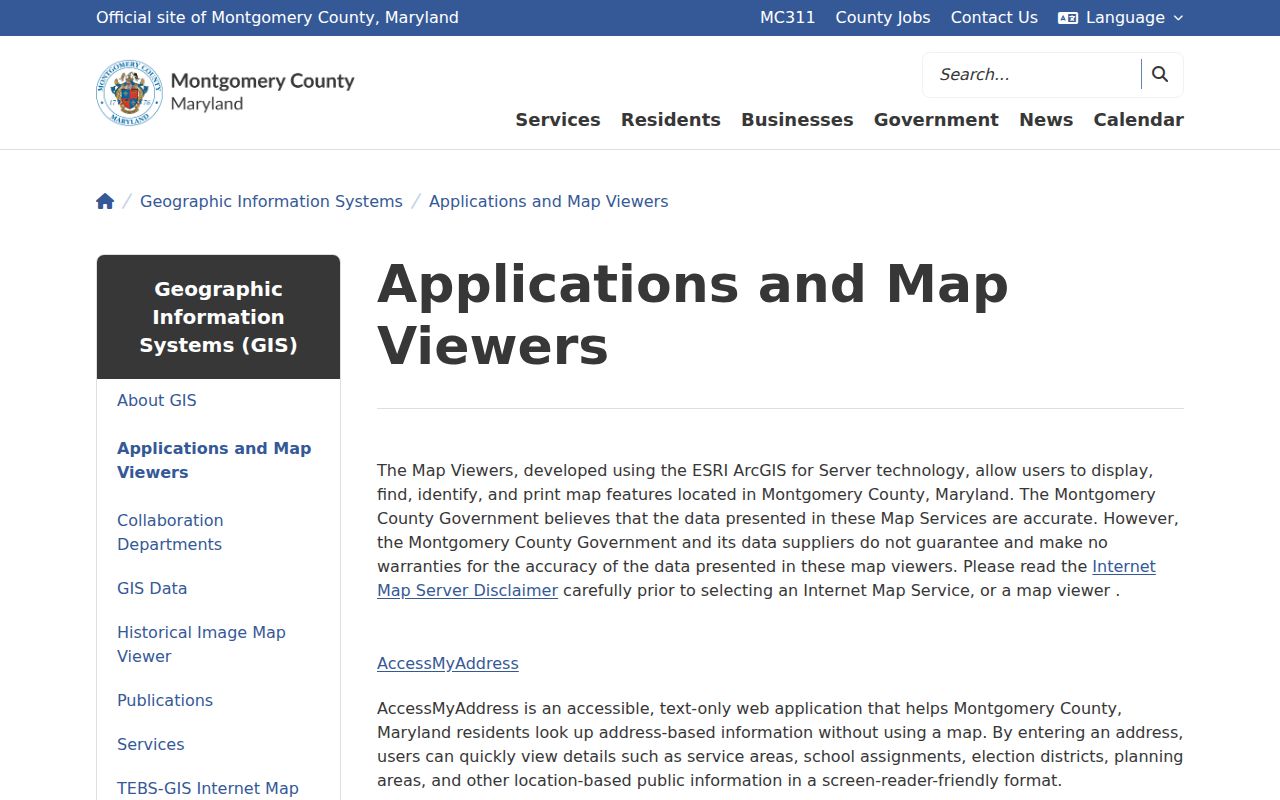
Use the source's standardized address later. A map overlay helps explain a place, but it does not identify every person connected to it.
Fairland Parcel Records in SDAT
SDAT bridges address and record key. It does not search by owner name, town, subdivision, or ZIP. Pick Montgomery County first. Then choose Address, Street Name, Property Account Number, Map Reference, or Property Sales. Leave the number off for a broad street result. If a number fails, try the official street spelling, a direction variant, an older spelling, or the account number from a prior result.
| SDAT route | What to enter | Fairland use |
|---|---|---|
| Address | Street number and street name | Find a premises record by the assigned location |
| Street Name | Official street name, number optional | See parcels associated with a street |
| Property Account Number | County, district, and PAN components | Open a known parcel directly |
| Map Reference | Map, parcel, or related map fields | Bridge a deed or legal description to a parcel card |
A SDAT result can show the property account number, premises and mailing addresses, last-deed owner, deed book and page, tax map, parcel, sale fields, assessments, and explanatory indicators. The mailing address gets the notices. It may differ from the physical premises. The owner field follows the last recorded deed. Neither field proves who lives there now. Individual searches are free, the system needs JavaScript, and it forbids automated collection.
- Parcel
- A mapped unit of real property identified by assessment and map information.
- Premises address
- The physical assigned location shown on the property record.
- Mailing address
- The address used for notices, which can be elsewhere.
- PAN
- A property account number used to reach a specific assessment record.
Note: Save the account number, deed reference, and result date before moving to another system, because each field carries a different meaning.
Fairland Deed Records by Parcel
Once SDAT hands you a deed reference, Maryland Land Records is the next stop. Its index runs on grantors and grantees, document type, and liber and folio, Maryland's book-and-page reference. A grantor sells or gives. A grantee buys or receives. The system is not a modern address index. That gap is why the parcel step comes first. Fairland deed searches work best when the address-to-parcel move precedes the index.
The Maryland Land Records portal view shows the official route for county selection, index navigation, book and page access, and digitized images.
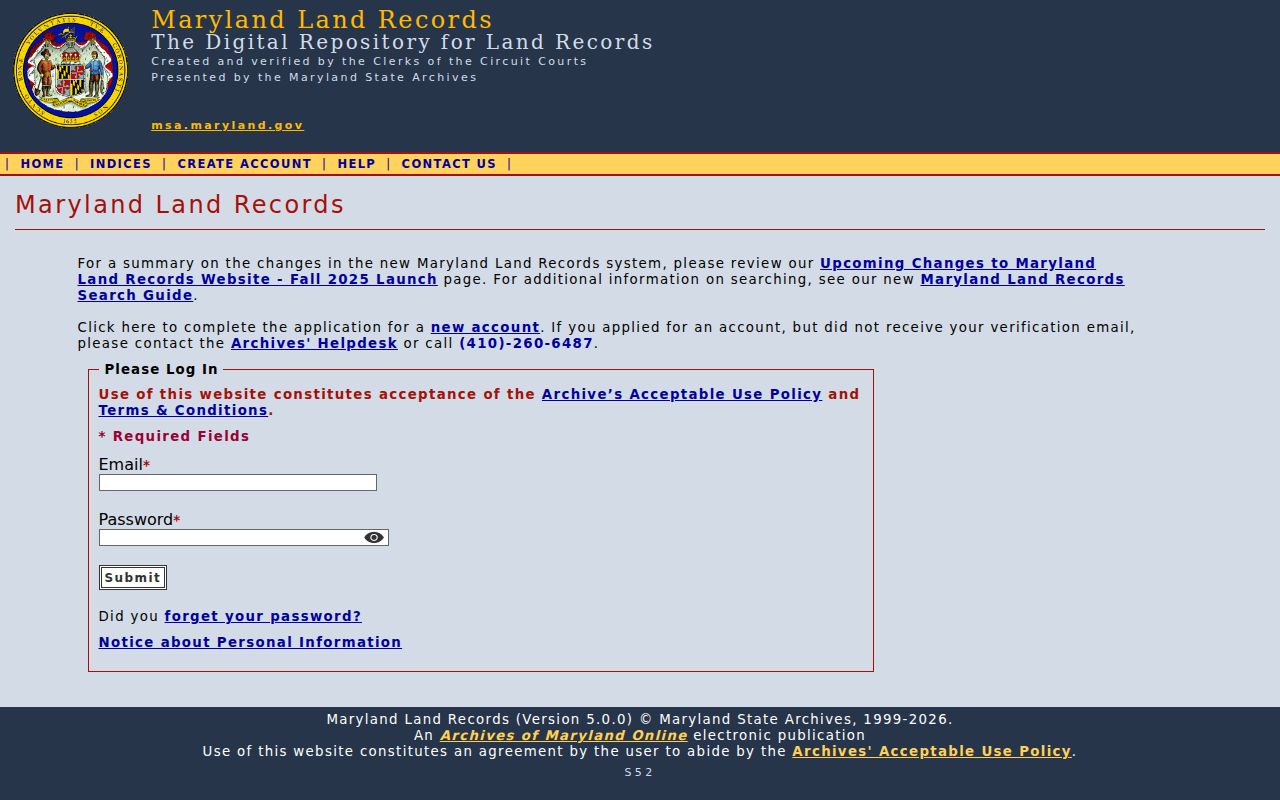
Modern Montgomery deeds run from January 1, 1977 through November 7, 2025, with older indexes and books continuing through archival paths. Free access needs a valid-email account. Trace one deed at a time. Use the prior party and the book/page reference, switching to historical indexes or the records room when the online sequence ends.
Fairland Voter Resident Lookup Fields
The state voter form is a narrow matcher. It is not a raw neighborhood list. It asks for first name, last name, birth date in MM/DD/YYYY form, a five-digit ZIP, and a street number. The middle initial stays optional. Try a supported nickname, former name, former ZIP, or street-number variation when a result is missing. The system updates daily. A recent registration or address update can take longer to appear.
A match can connect to voter services, districts, a local board, and related election information. Ballot choices never appear. Written application, oath, purpose, fee, and use rules govern the full state voter products. The same rules govern the county voter products. County files carry a first-of-month date. Record that date instead of treating the data as timeless.
One form matches one person. The Maryland Voter Lookup form uses the exact name, birth-date, ZIP, and street-number combination described above.
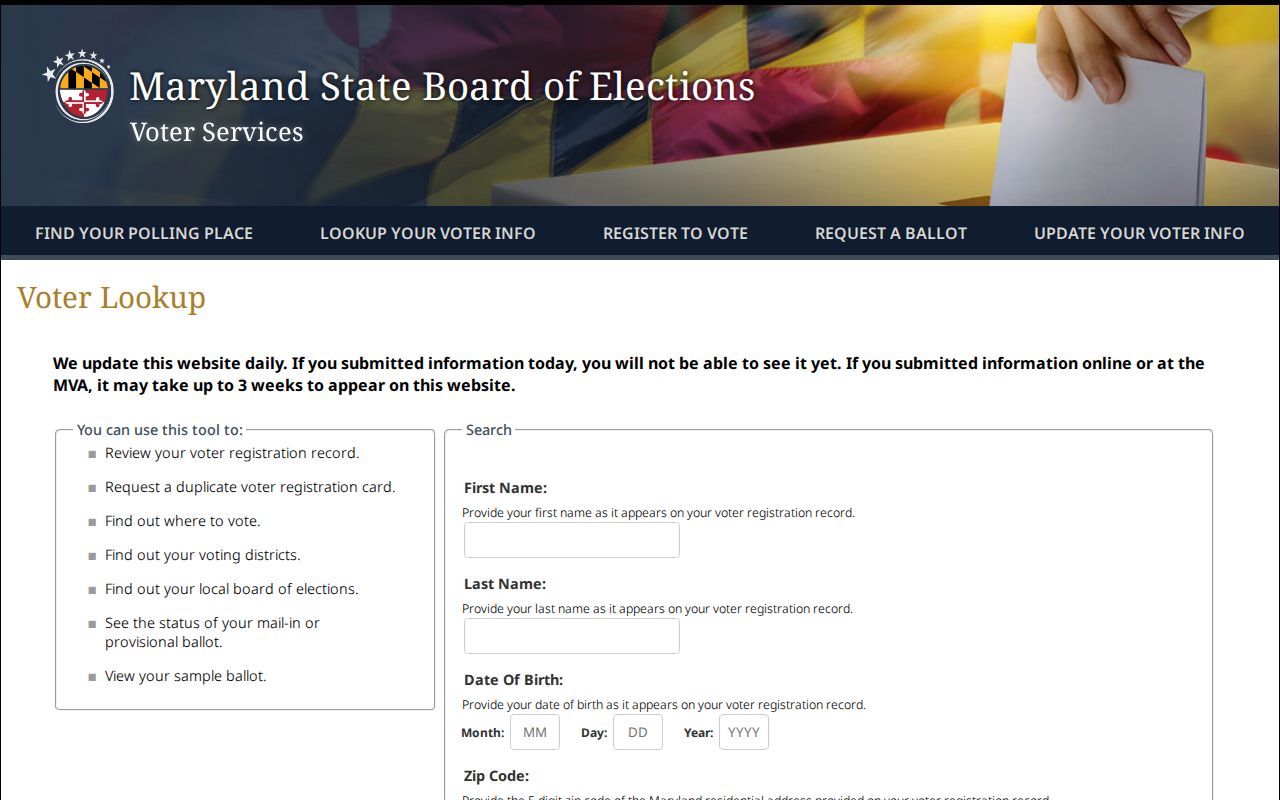
A blank result can mean several things. Spelling differences, record lag, a changed address, inactive status, or protected-address status can all hide a match, so a no-result never proves a person is absent from Fairland.
Current Fairland Resident Sources
No single roll lists every Fairland household. Each official source records a limited relationship. An assessment ties a parcel to the last deed owner, a land index names instrument parties, an election record tests a submitted voter match, and a permit logs an application or inspection. County GIS supplies the geographic frame. Before drawing a conclusion from a name and address, check two independent sources.
| Current source | What it can show | Access route |
|---|---|---|
| SDAT parcel card | Parcel, last-deed owner, premises and mailing fields, deed reference | Free individual address, street, PAN, map, or sales search |
| Voter lookup or product | A submitted registration match or regulated voter-file fields | Individual form, or State and County application routes |
| Land-record index | Grantor, grantee, document type, liber, folio, and image route | Free account online or Circuit Court public room |
| Permit data search | Address-keyed application, review, and inspection chronology | County online address, ZIP, permit, or date paths |
| Community records | Public agendas, local context, and historical collection leads | County meetings, library, and historical repositories |
A Fairland residents directory stays honest when it preserves those limits instead of merging every field into a presumed household profile. Official records are usually free. Others state their copy charges. Either way, each record identifies its custodian, while commercial listings can go stale, merge same-name people, and leave source dates unclear, so personal research should circle back to the original office for confirmation.
| Official-record route | Commercial listing category |
|---|---|
| Names the custodian, record type, field meaning, and date | May not identify the underlying record or when its address changed |
| Allows a parcel, deed, voter, court, or archive result to be checked at its source | Can blend same-name people or retain an old address |
| Uses the access and privacy rules for that record family | Does not replace the original custodian's access rules |
Fairland Court and Estate Records
Court and probate systems live apart from property records. Search them separately. The statewide court-summary portal can return a case number, party names, selected addresses, hearing dates, docket events, and some document links. It is not the full court file. Restricted, sealed, shielded, expunged, juvenile, and other protected material stays outside normal public results. A specific open file may still require a courthouse kiosk or an authorized electronic-court route.
Estate questions call for the state estate index. Use the estate number when you have it. Otherwise narrow by last name, county, first or middle name, status, filing date, estate type, and party type. Confirm every name hit. Match it to the estate number and filing date. Probate files sit with the Register of Wills, and access to the full filing is separate from the index.
Maryland Case Search handles state-court party or case questions. PACER is separate for federal cases. County detention data is limited too, since Montgomery County has no automated public roster and directs status questions to Inmate Records by phone.
Note: A docket or detention record can carry a historical address and is never a stand-in for a Fairland resident record.
Fairland Vital Record Boundaries
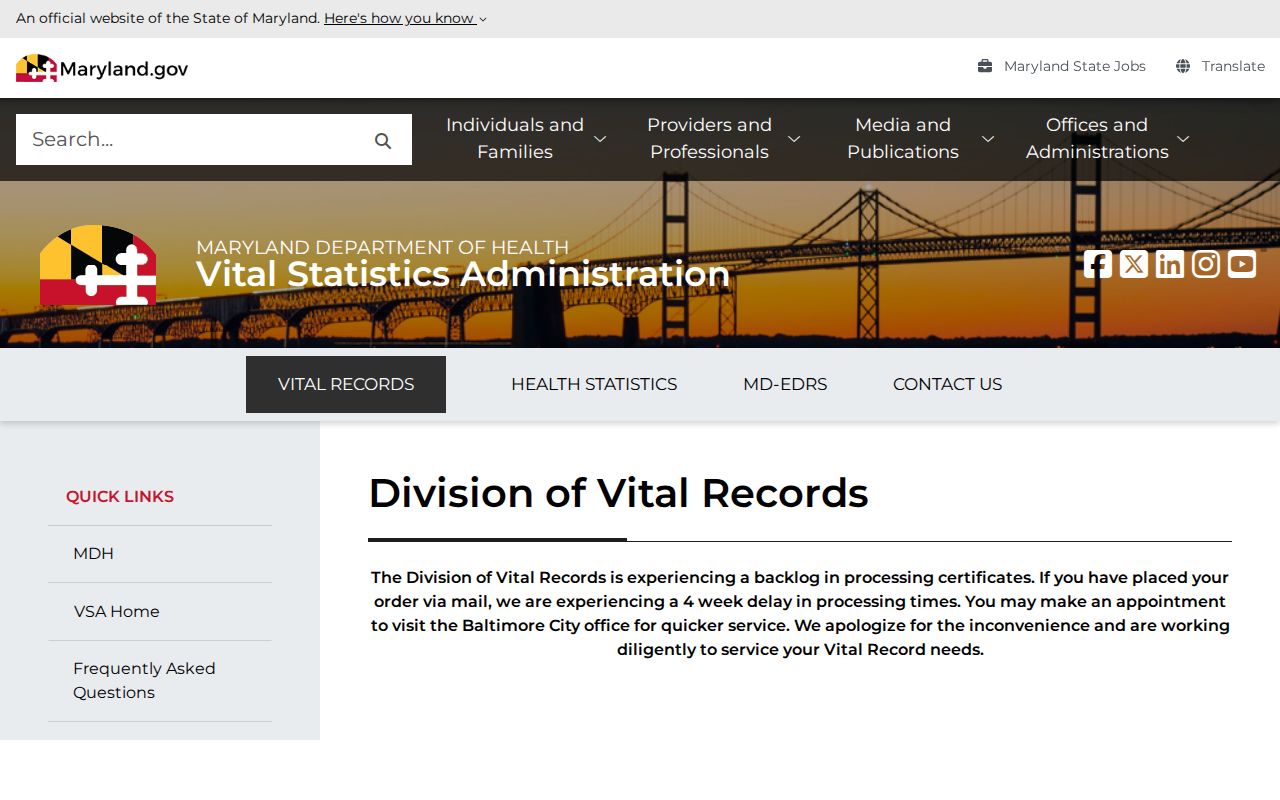
Vital records are not open name directories. Births, deaths, marriages, and divorces are controlled event records. Maryland's Division of Vital Records handles certified state services for its date ranges, through appointment-based lobby service, mail, phone, and its authorized online channel. Montgomery County's local health office offers appointment-based local birth and death service for qualifying transactions. Older material can take a different historical route.
Maryland law restricts birth records under 100 years. Death records close for ten. Births past 100 years, deaths past 10, marriage licenses, and absolute divorce or annulment records open wider, subject to each record system's rules. A recent certified copy can still require identification, relationship, legal authority, or another documented entitlement. A divorce verification is not the decree.
Each record type has official channels. The Maryland Division of Vital Records service page spells them out.
When a recent record is restricted, follow the agency's stated eligibility process instead of filing a general records request. For older research, keep the date, county, and archive series in the citation.
Fairland ZIP Resident Address Labels
Fairland's ZIP question has more than one working answer. Official Fairland-area addresses use 20866 with a Burtonsville postal label and 20904 with a Silver Spring postal label. County materials place 20905 across the surrounding Fairland, White Oak, and Cloverly geography, though no complete street-by-street crosswalk from CDP to ZIP exists. Treat 20905 as an edge-area lead rather than a blanket assignment.
A ZIP is not a parcel, an election district, a planning area, or a Census boundary. USPS confirms a full address. SDAT uses its own premises field. Voter records use residential fields with precinct and split information. Near a boundary, compare the exact address in USPS, county address tools, SDAT, and County GIS, and save each returned postal city rather than overwriting it with a preferred local label.
Old Columbia Pike offers a concrete example: Praisner Library and Fairland Recreation Center use Burtonsville 20866, while the East County Regional Center on Briggs Chaney Road uses Silver Spring 20904. Note: Postal-city labels help route mail but do not create a Fairland city government or a single directory boundary.
Fairland Resident Records and MPIA
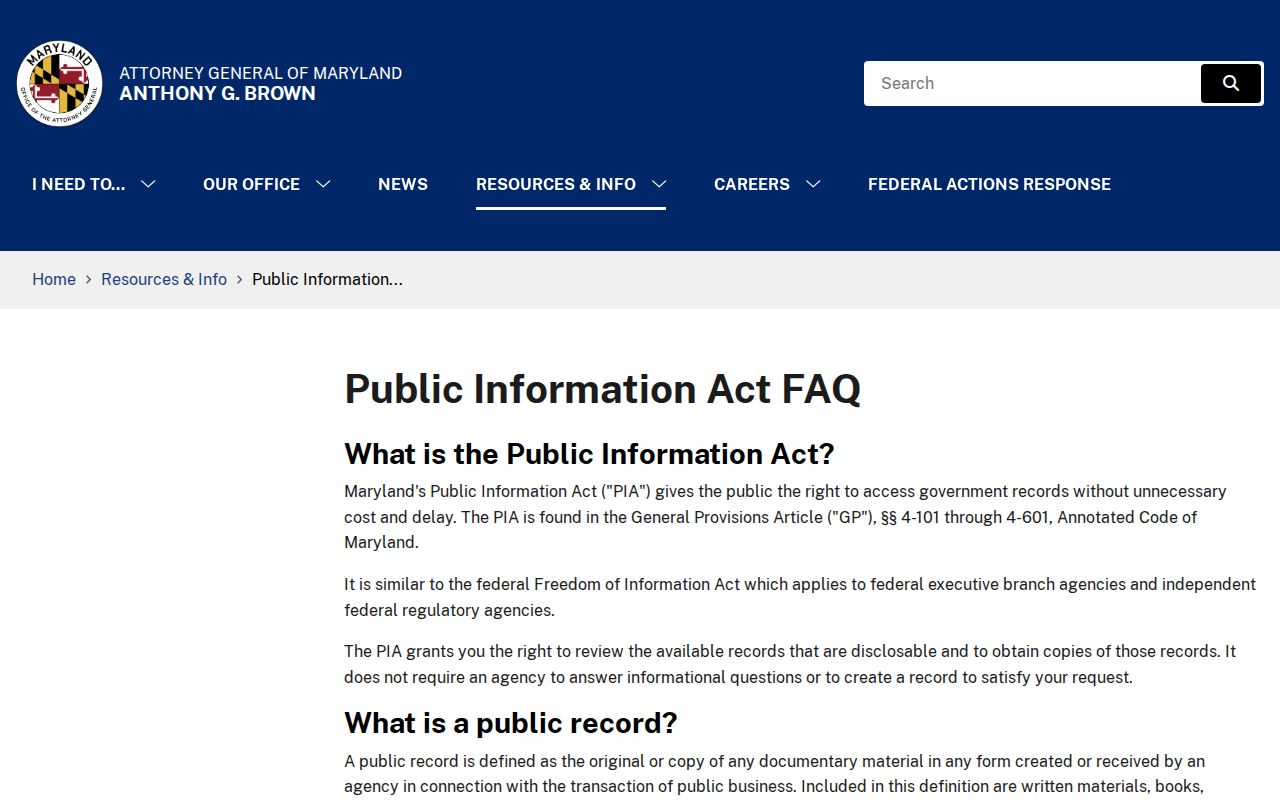
Maryland's Public Information Act opens a door to records that already exist. It never obliges staff to create new records. Send a focused request to the right custodian. Name the address, date range, record type, and desired inspection or copy format. Good examples include a permit file at one address. Others are a planning document, a meeting packet, or a specific GIS layer. Ask for a fee estimate. Request electronic delivery where it fits.
Agencies may redact exempt material and charge allowable search, review, and copy costs. Keep a log of the custodian, request date, record identifier, range, and format. Add the fee estimate, the response, and any redactions. A no-responsive-record answer differs from material that is not indexed or not releasable. Voter and vital records follow their own statutes and procedures. A general request cannot override them.
For custodian, request, and access questions, the Maryland PIA FAQ has answers. It also covers fees and serves as the state starting point.
A narrow request is usually the clearest one. It also honors records that stay open for inspection yet remain protected from broad redistribution.
Historical Fairland Resident Directory Trails
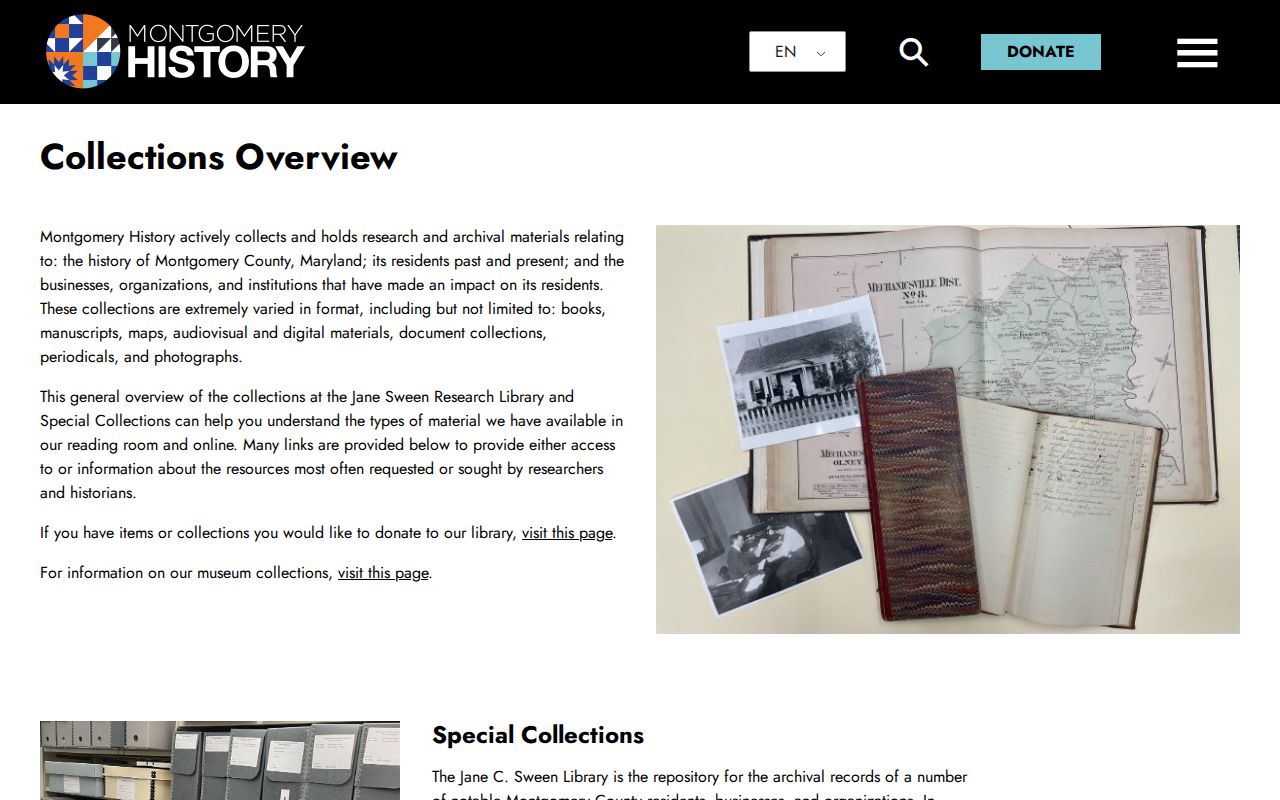
Fairland households hide under the labels of their era. The search works through dated sources. Montgomery History, local library catalogs, and the Silver Spring Historical Society bridge a name to a dated address, newspaper notice, cemetery card, map, or directory entry. Search Fairland, Briggs Chaney, Burtonsville, Silver Spring, and Old Columbia Pike. Also try other historical labels these groups support. Record the publisher, year, page, and spelling exactly as printed.
The society's directory shelf runs deep. Nelson's Washington Suburban Directory covers 1912, 1916 through 1918, and 1923. Polk's Washington Suburban Directory spans 1927 through 1928 and 1930 through 1931. Selected Polk's Silver Spring directories run 1954 to 1973. A community phone book continues from 1995. Newspapers, maps, photographs, yearbooks, and manuscripts round out the collection. For a shelf-by-shelf account, use the Fairland city directory collections.
Montgomery History holds much more. Montgomery History collections include the Montgomery County Sentinel from 1855 to 2020. They also include the Gazette from 1960 to 2015. Tombstone cards cover 111 cemeteries and family burial grounds. Church records, land abstracts, tax assessments, and census material round out the holdings.
These collections yield leads, not proof. Match a dated directory entry against a deed, census, court, or original archival record before tying it to a household.
Fairland County-Led Record Story
Fairland's record story begins with Montgomery County, not a municipal archive. County land records reach back to July 1777. That early ground is organized by county, district, grantor, grantee, liber and folio, patent name, or survey rather than the modern CDP. Labels shift at every stop. A historical trail may use a different community or postal label each time. Keep three evidence types distinct. A title record, a planning document, and a directory each prove something different.
Montgomery History's property guidance points researchers toward patent names like “Bite the Biter,” “Magruder's Folly,” and “Chiswell's Inheritance” when a deed chain reaches the older record landscape. Klinge atlases from 1931 through 1959 add covered-area ownership and book/page clues. Map-index entries can help too. Look for Fairland District/Greencastle Road, Fairland Acres, Fairland/Beltsville, and Fairland/Cloverly/White Oak. They can flag an earlier subdivision or road form. None claims a legal boundary.
Fairland Resident Privacy Boundaries
Public access in Maryland has firm limits. The Safe at Home Address Confidentiality Program can give an eligible participant a substitute address and mail forwarding. Court files can be sealed, shielded, or expunged. Voter products protect specified information behind a written-application and oath process. SDAT terms bar automated collection. A deed proves nothing about who lives there now. The same is true of a permit, map, or docket.
A 2025 privacy procedure law, Chapter 718, reinforces the need to check agency policy before combining names, addresses, dates, and geolocation fields. Do not reverse-engineer a missing address. Never rebuild a redacted field or republish a raw street list. If a record is wrong, seek correction from the actual custodian. Where protection may apply, stop the address search and use the agency's authorized route.
Good Fairland resident research stays narrow. It stays dated and source-specific, too. It respects the line between a public item, a released copy, and permission to build a new combined list.